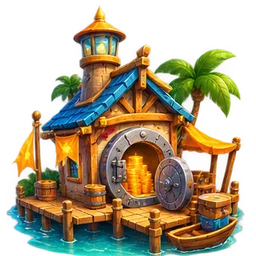
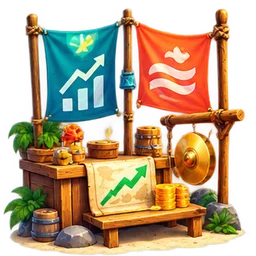
What they see
Tap a credit card. Get the thing.
The purchase looks instant while the work, limited balance, and alternatives behind it remain hidden.
Island Tycoon · Ages 9–11 · 16 connected modules
Inside one connected island adventure, learners use fictional tokens to compare choices, calculate costs, update their ledger, and see how each decision changes what happens next.
Best for: learners beginning with everyday questions about spending, earning, saving, business, ownership, prices, and risk.
Money is already part of their world
The purchase looks instant while the work, limited balance, and alternatives behind it remain hidden.
Children deserve to practice money decisions while the stakes are fictional and forgiving.
A complete path for your family
The goal is not to make a child sound like an economist. It is to help them pause and work through a choice before that choice becomes a habit.
Separate needs from wants and name the tradeoff.
Work out what a choice costs and what remains.
Update the Island Ledger and follow the balance.
Describe why the consequence might change the next decision.
What makes Island Tycoon different
A lesson introduces the idea, applied scenes make the learner use it, and the ledger shows the numbers before the choice becomes part of the island.
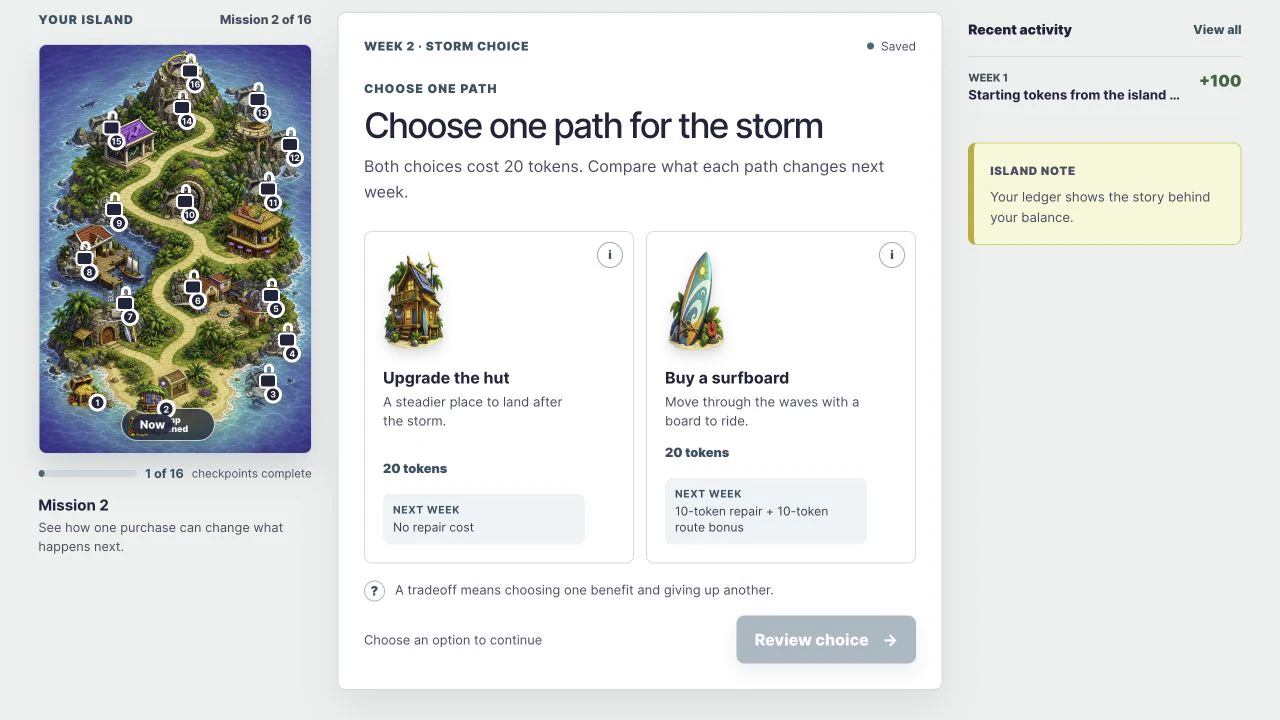
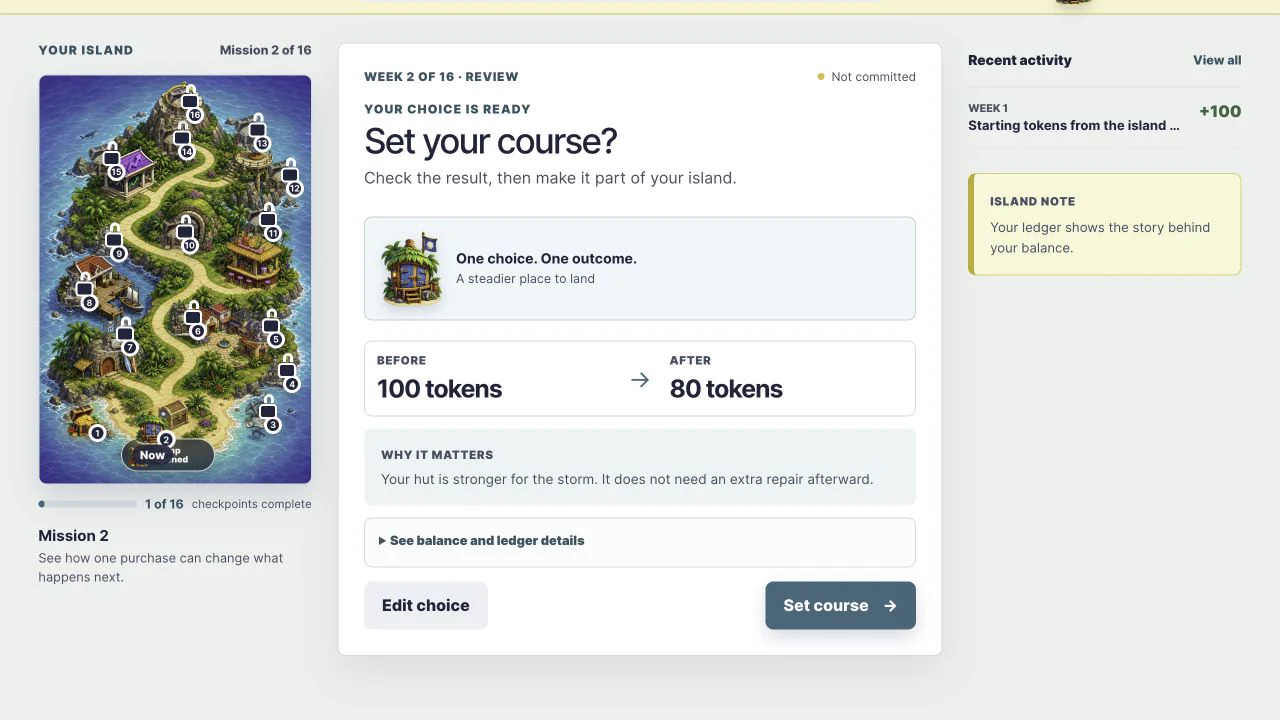
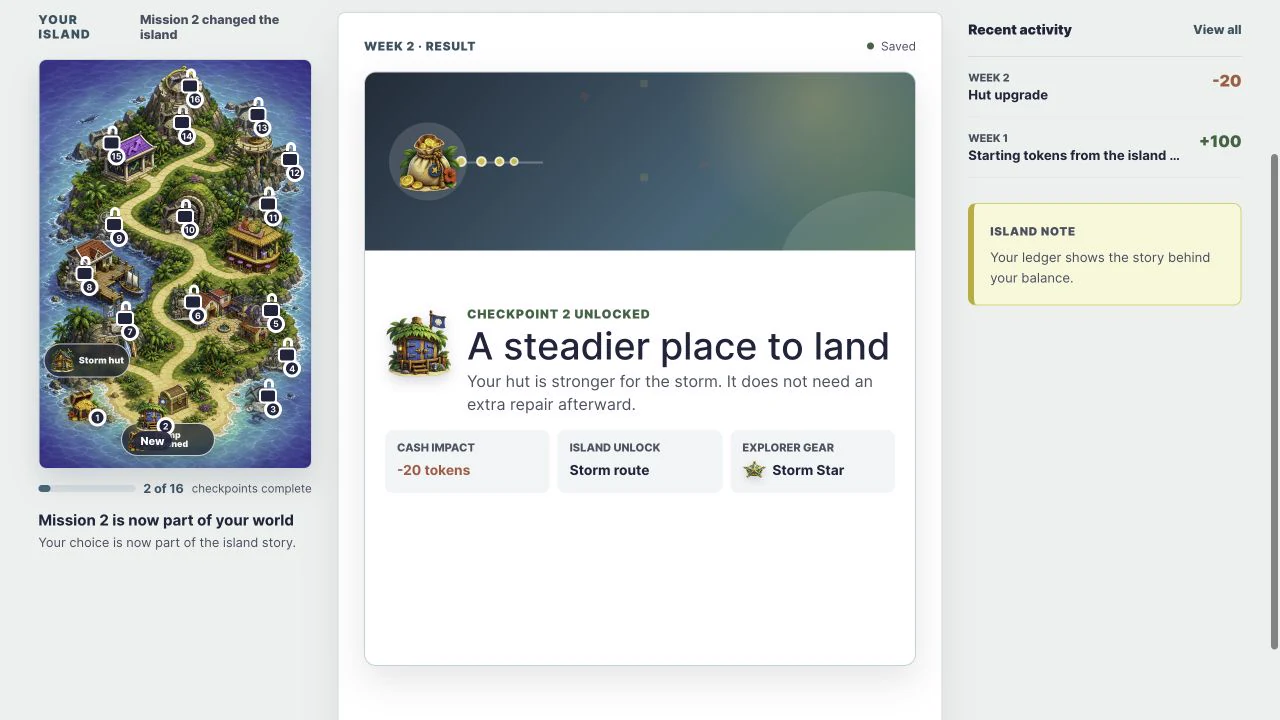
One decision, from lesson to consequence
The learner starts with 100 island tokens. A storm is coming. Both choices cost 20, but only one protects the roof.


The embedded story lesson introduces needs, wants, limited resources, and tradeoffs.
Five focused questions make sure the central idea is clear before play begins.
Applied scenes ask the learner to compare, calculate, classify, interpret, and plan.
The learner sees the numbers, commits the choice, and discovers its consequence.
The complete learning journey
Four connected phases help learners use earlier ideas as the island’s choices become more complex.

Explain why money makes exchange easier than matching one trade to another.
Compare two purchases and explain how purpose changes the decision.
Connect contribution, problem-solving, and creating value to income.
Read a simple paycheck and describe why the same amount may buy less over time.

Use a simple model to see how time and reinvestment can change growth.
Subtract startup and operating costs from sales to calculate what remains.
Explain what a share represents and why spreading choices changes risk.
Describe how a business may share profits and why ownership value can change.

Explain how more willing buyers can affect what people are prepared to pay.
Explain how abundant inventory and fewer buyers can affect a price.
Identify upward, downward, and steady patterns without predicting what must happen next.
Describe how events can change expectations, demand, and a price.

Identify uncertainty and consider a possible downside before choosing.
Compare what could be gained with what could be lost and avoid relying on one outcome.
Connect value, ownership, supply, demand, and risk across earlier decisions.
Use the adventure’s foundational ideas to explain a complete money decision.
What the household receives
Age-appropriate instruction appears inside each stage, without sending the learner to another course.
Short questions surface misunderstandings before the learner reaches the main decision.
Varied challenges turn definitions into calculations, comparisons, classifications, and plans.
Balances, income, costs, ownership, and choices stay connected in one visible record.
Choices change the island, update resources, and create context for later stages.
The learning path is prepared; the adult controls the pace and continues the conversation.
Straight answers for families
It is a structured financial-literacy curriculum delivered through an integrated game. Lessons, knowledge checks, applied decisions, ledger work, and consequences all happen inside the Island Tycoon experience.
No. Island Tycoon carries the learning sequence and explains the decisions. The adult controls the pace, helps the learner talk through a choice, and connects the idea to everyday life.
Island Tycoon is designed for ages 9–11. A younger or older learner may still be ready; consider their reading comfort, math experience, and interest in talking through choices. You know your child best, and the adult sets the pace.
Learners follow short on-screen questions and instructions along with the story lessons. A parent or caregiver can read a prompt aloud or explain an unfamiliar word. Decide whether that level of support feels right for your child and move at your family’s pace.
The activities use approximately third-grade math, including multiplication, to compare options and follow balances. An adult can help read a prompt or work through a calculation together; the learner can still explain the choice and its tradeoff.
The measured hosted lesson videos range from 7:22 to 12:30 each. Checks, decisions, calculations, and conversation add time that varies by learner and family, so we do not give a total session-time promise. Pause and continue later at your family’s pace.
Each stage combines an embedded story lesson, a short check for understanding, applied game scenes, a ledger decision, a review of the numbers, and a consequence that becomes part of the island.
No child email address is required. Access is organized through an adult-owned household account, and public forms on this website are for adults.
The household license covers children and caregivers within the purchasing household. It does not cover a co-op, tutoring business, classroom, or other multi-household use.
Enrollment and payment are not open yet. The planned subscription is $249 charged once every 12 months, with automatic annual renewal. Access, cancellation, refund, and support terms are being finalized before enrollment opens. Adults can use the inquiry form to ask about the program.
No. It uses fictional tokens, companies, prices, and outcomes for educational practice. It does not connect to a brokerage, execute trades, recommend securities, or provide individualized financial advice.
No. Every charter school, public program, private program, and education organization determines its own eligibility, purchasing, reimbursement, documentation, and implementation requirements.
For charter, public, and private education programs
Review the learning sequence, learner actions, delivery model, technology requirements, privacy boundaries, and purchase structure relevant to your organization’s independent decision.
Request Program-Review Details Designed to make program review easier. Eligibility, approval, purchasing, reimbursement, and implementation decisions belong to your organization.Island Tycoon · Ages 9–11
Give your 9–11-year-old an island where every choice has a visible tradeoff—and every result gives your family something useful to discuss.
Ask about Island Tycoon